Mega Millions vs. Powerball: Which Lottery Game is Better?
Written by Jackpot Staff
Updated: March 3, 2026
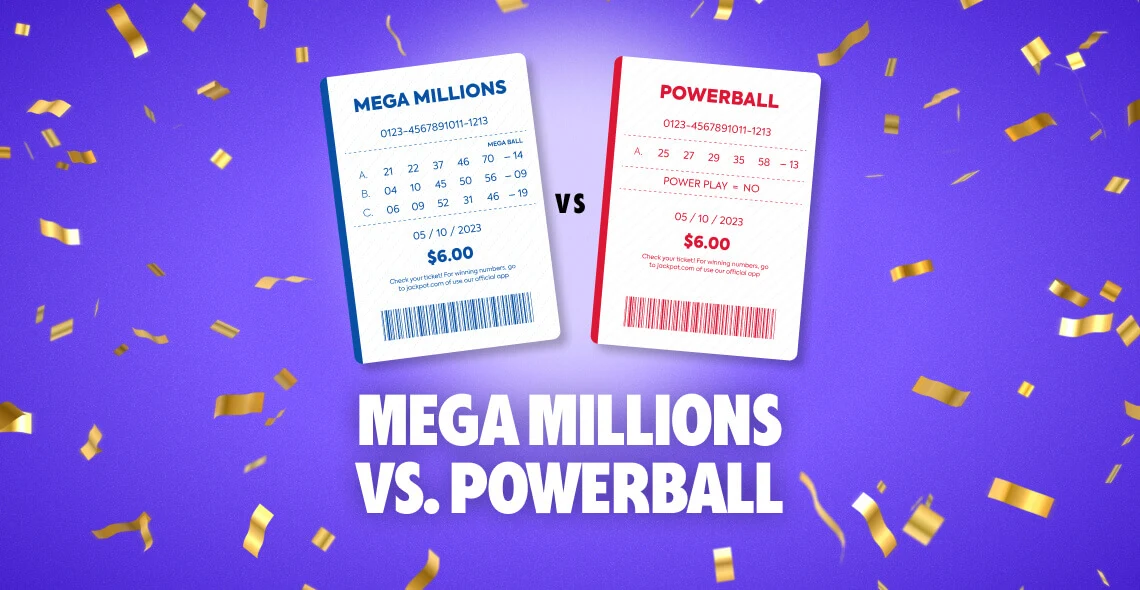

For lottery enthusiasts across the United States, the ultimate question is: Powerball vs. Mega Millions? Both games offer exciting, multi-million dollar jackpots, but they have key differences in terms of how you play, odds of winning, ticket price, and even how often you can win.
Whether you're chasing the biggest potential payout possible or simply looking for the best overall chance to walk away with a prize, this guide breaks down everything you need to know about the two lottery giants.
Understanding Mega Millions and Powerball
To start, here is a side-by-side comparison of the main differences between Mega Millions and Powerball.
| Feature | Mega Millions | Powerball |
|---|---|---|
| Main Number Pool | 1-70 (Choose 5) | 1-69 (Choose 5) |
| Second Number Pool | 1-24 (Mega Ball) | 1-26 (Powerball) |
| Jackpot Odds | ~1 in 290.5 million | ~1 in 292.2 million |
| Overall Odds (Any Prize) | ~1 in 23.07 | ~1 in 25 |
| Ticket Cost | $5 | $2 |
| Multiplier Option | Built-In Multiplier | Power Play ($1 extra) |
| Multiplier Max Value | 10x | 10x (for non-jackpot prizes, with specific conditions) |
| Starting Jackpot | $50 Million | $20 Million |
| Drawing Days | Tuesdays, Fridays | Mondays, Wednesdays, Saturdays |
Mega Millions: The Basics
To play Mega Millions, players must choose five numbers from a pool of 70 and one additional number — known as the Mega Ball — from a pool of 24. Drawings for Mega Millions take place twice a week, offering players a chance to win big on Tuesdays and Fridays. The anticipation builds as players eagerly await the results, imagining the possibilities of what they could do with their newfound wealth.
To win Mega Millions, players must match all six numbers drawn. Mega Millions also offers eight additional prize tiers, with prizes ranging from a few dollars to millions. These prizes are awarded for matching various combinations of the numbers drawn, and they are guaranteed regardless of ticket sales. Even if players don't hit the jackpot, they still have a chance to win a substantial amount of money.
Powerball: The Basics
Powerball requires players to select five numbers from a pool of 69 and one Powerball number from a separate pool of 26 numbers. Drawings for Powerball occur on Mondays, Wednesdays, and Saturdays, ensuring players stay excited all week long.
Like Mega Millions, Powerball offers multiple prize tiers as well as its massive rolling jackpot. Secondary prizes are awarded for matching various combinations of the numbers drawn, and the amount you can win depends on ticket sales and the number of winners.
Both Mega Millions and Powerball bring thrills to millions of people across the United States, and bring an exhilarating experience to lottery enthusiasts, allowing them to dream big.
What’s the Difference Between Powerball and Mega Millions?
Mega Millions and Powerball follow a similar format — the classic attempt to match as many numbers as possible for varying prize levels, but there are some differences in how each game functions. Understanding these nuances enhances your lottery experience and allows you to play more confidently. Let's delve deeper in:
Mega Millions Jackpot Explained
Mega Millions jackpots fluctuate depending on ticket sales and the number of jackpot winners, allowing them to soar to staggering amounts, especially when they roll over from previous drawings. In addition, all non-jackpot prize tiers are guaranteed regardless of ticket sales, so even non-jackpot winners can walk away with jaw-dropping sums.
Thanks to the addition of the built-in multiplier, Mega Millions players can significantly increase their non-jackpot prizes by multiplying their potential winnings by two, three, four, five, or even ten times. This Multiplier adds an element of unpredictability and excitement to the game, increasing the potential rewards for lucky players.
How Does the Powerball Jackpot Work?
Powerball jackpots are based on ticket sales, but the initial jackpot is always set to $20 million. If nobody wins, the Powerball jackpot rolls over, adding a minimum of $2 million to the prize pool. This straightforward approach offers players more clarity on potential winnings and ensures transparency in prize distribution — players know exactly how much they can win.
Powerball also has the ‘Power Play’ feature, which players can opt for at an additional cost to significantly enhance non-jackpot prizes (prizes for matching 5 or fewer balls). Players can multiply their winnings by upwards of 10 times the original amount. Third place prize could be multiplied from $50,000 to as high as $500,000 with Power Play, making the Powerball experience even more exciting.
The Odds of Winning Powerball vs. Mega Millions
When playing Powerball or Mega Millions, understanding the odds of winning can help you play more confidently. Let's take a closer look at the probabilities of winning in either draw game:
Mega Millions Odds
The odds of winning the Mega Millions jackpot are 1 in 290,472,336. However, the overall odds of winning any prize are much better, and range from 1 in 23.07 to 1 in 12,629,232. This means that while the chances of winning the top prize are slim, there are still plenty of opportunities to win smaller prizes.
Each Mega Millions ticket costs $5, and players must choose five numbers from 1 to 70 and a Mega Ball number from 1 to 24. The drawings are held every Tuesday and Friday night, with millions of hopeful players tuning in to see if their numbers will come up.
Powerball Odds
The odds of winning any Powerball prize are 1 in 25, but the odds of winning the jackpot are 1 in 292,201,338. Despite the steep odds, Powerball remains one of the most popular lottery games in the United States, with players from across the country participating in drawings three times a week.
To play Powerball, participants must select five numbers from 1 to 69 and a Powerball number from 1 to 26. Each ticket costs $2, and the drawings take place every Monday, Wednesday, and Saturday night. The excitement builds as the jackpot grows, often reaching hundreds of millions of dollars and capturing the imagination of players everywhere.
Although the odds of winning either lottery game are not very high, the potential rewards make it a thrilling experience for players who dream of hitting the jackpot. The chance to turn a few dollars into a fortune is what keeps the excitement alive and the lines at lottery retailers long.
How Jackpots Grow (Rollovers)
One of the biggest benefits of both Mega Millions and Powerball is the potential for jackpots to reach astronomical figures, which is thanks to the rollover mechanism that works similarly for both games.
What is a Rollover? If no ticket matches all the winning numbers to claim the jackpot in a given drawing, the prize money isn't lost. Instead, it "rolls over" and is added to the jackpot amount for the next drawing.
- Starting Point: The newly updated Mega Millions now begins at $50 million, while Powerball maintains a $20 million starting jackpot (estimated annuity value).
- How Growth Happens: When a drawing occurs and nobody wins the top prize, the jackpot fund for that draw is carried over and combined with the funds generated by ticket sales for the following draw. This process repeats, causing the estimated jackpot to increase progressively with each rollover.
- What Determines the Increase? The exact amount the jackpot increases between drawings isn't fixed. It primarily depends on two factors for both lottery games:
- Ticket Sales: The more tickets sold for a particular drawing, the larger the contribution to the prize pool and, consequently, the bigger the potential rollover increase. High jackpots naturally fuel higher sales.
- Interest Rates: Since the advertised jackpot value is based on a 30-year annuity, current interest rates play a role in estimating that total value.
Key Similarity: The fundamental rollover mechanism is the same for Mega Millions and Powerball. The lack of a jackpot winner directly leads to a larger prize pool for the subsequent draw in both games. While the differing odds might affect how often each game's jackpot is won (and thus how often it rolls over), the process of rolling over and growing the jackpot is similar.
Comparing Jackpots
Now, let's examine the jackpots offered by Mega Millions and Powerball, as these are often the driving forces behind players' excitement and participation.
What is the Biggest Mega Millions Jackpot?
Mega Millions has produced some of the largest jackpots in lottery history. In fact, in August 2023, the highest Mega Millions jackpot ever recorded made headlines with a staggering $1.6 billion. This colossal sum captured the attention of people around the world and sparked dreams of untold riches.
While such enormous jackpots are rare, Mega Millions consistently offers multi-million dollar prizes, providing players with a chance to fulfill their wildest dreams and change their lives forever.
What is the Biggest Powerball Jackpot?
Powerball is no stranger to massive jackpots either. In November 2022, Powerball made headlines when a lucky California resident won a record-breaking $2.04 billion. In 2025, Missouri and Texas lottery players won prizes totalling $1.787 billion. An even larger $1.8 billion Powerball jackpot was won on December 24, 2025, and was the second-largest US lottery prize ever won.
These historical Powerball jackpots have all encouraged lottery players to purchase tickets in pursuit of lucky winnings. Because of consistent massive jackpots and life-changing second prize tiers, Powerball has captivated players across the states and worldwide for decades.
Ticket pricing and sales
When considering participating in these lottery games, it's essential to know the cost of tickets and where to buy them.
Mega Millions Tickets Costs
Mega Millions tickets cost $5 per play including the built-in multiplier.
Tickets can be purchased from authorized retailers in participating states or online through various trusted platforms. It's important to note that different states may have different cutoff times for ticket sales, so it's advisable to check the rules and regulations specific to your location.
Powerball Ticket Costs
Powerball tickets also cost $2 per play. For an extra $1, players can opt for the Power Play feature, potentially increasing their non-jackpot prizes.
Similar to Mega Millions, tickets can be bought from authorized retailers in participating states or through trusted online platforms. Checking the specific rules and regulations for your area is crucial to ensure you don't miss out on a chance to play.
Is it easier to win the Powerball or Mega Millions jackpot?
It is statistically slightly easier to win the Mega Millions jackpot (odds ~1 in 290.5 million) than the Powerball jackpot (odds ~1 in 292.2 million).
Which lottery game has better overall odds of winning any prize?
Mega Millions has slightly better overall odds (approximately 1 in 23.07) compared to Powerball (approximately 1 in 24.9).
Which game typically has bigger jackpots?
Both games regularly feature massive jackpots often reaching hundreds of millions or even billions after rollovers. Historically, Powerball holds the record for the single largest jackpot ($2.04 billion in 2022), but Mega Millions has also awarded jackpots over $1.5 billion. Jackpot size varies greatly depending on sales and rollovers.
Can I use the multiplier (Megaplier/Power Play) on the jackpot?
No, the Multiplier (Mega Millions) and Power Play (Powerball) options only multiply non-jackpot prizes.
How much does a Mega Millions or Powerball ticket cost?
A standard Powerball ticket costs $2 per play, with the Power Play option available for an additional $1. Mega Millions ticket is $5, which includes a built-in multiplier option.
How often are the lottery drawings held?
Mega Millions drawings are held twice a week (Tuesdays and Fridays). Powerball drawings are held three times a week (Mondays, Wednesdays, and Saturdays).